
From Blueprint to Reality: How 3D Printing is Reshaping the Construction Industry
By Fundi Link3 min read
How construction-scale 3D printing boosts speed, design freedom, safety, and sustainability—and the companies leading the shift.
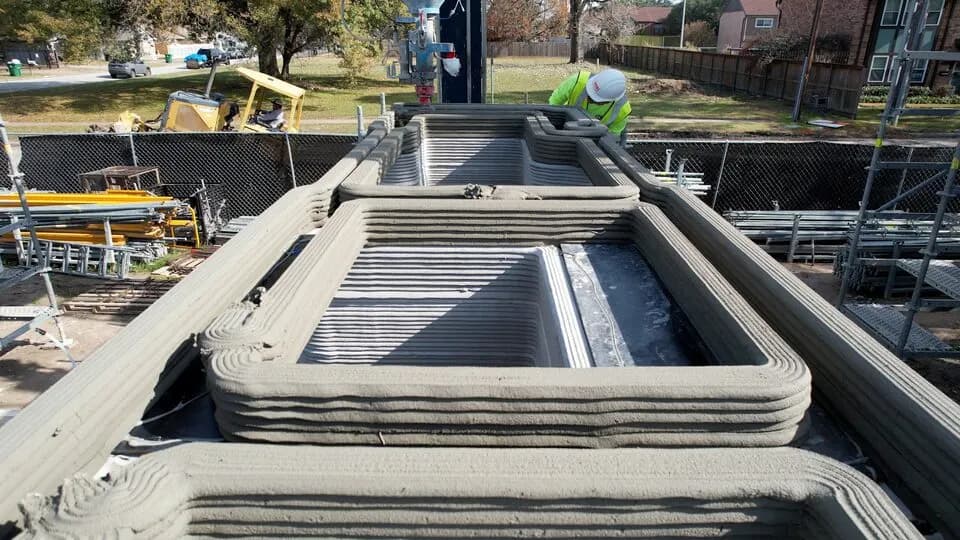
The construction industry has long been viewed as resistant to change, clinging to traditional building methods that have remained largely untouched for decades. However, a revolutionary technology is quietly reshaping this landscape – 3D printing. What was once a niche application for creating small plastic prototypes is now being scaled up to construct entire buildings, promising to disrupt long-established practices in construction.
At its core, construction-scale 3D printing relies on an industrial robotic arm guided by digital blueprints to precisely layer materials, such as concrete, polymer composites, or metal alloys, to create structural components.
Advantages of 3D Printing in Construction
This additive manufacturing process offers several advantages over conventional construction techniques.
1. Increased Speed and Efficiency
One of the primary benefits of 3D printing in construction is the potential for dramatically increased speed and efficiency. By automating the building process, 3D printers can work around the clock, unimpeded by human constraints such as fatigue or limited working hours. Additionally, the layer-by-layer additive approach minimizes material waste, as only the required amount is deposited.

2. Design Flexibility
Traditional construction methods are often limited by the constraints of molds, formwork, and human execution. In contrast, 3D printing allows for virtually unlimited design complexity without incurring additional costs or challenges. Architects and engineers can unleash their creativity, exploring organic shapes, intricate geometric patterns, and innovative structural forms that would be prohibitively expensive or even impossible to construct using conventional methods.
3. Improved Safety and Sustainability
Construction sites are inherently hazardous environments, with risks of falls, injuries from heavy equipment, and exposure to hazardous materials. By automating a significant portion of the building process, 3D printing minimizes the need for human presence on active construction sites, enhancing overall safety.
4. Sustainable Construction
As sustainability becomes an increasingly crucial consideration in construction, the inherent eco-friendly nature of additive 3D printing processes gives this technology a distinct advantage over conventional building methods. Reduced waste, recyclable materials, lower transportation impacts, and optimized designs are all factors that make 3D printing an attractive solution for green construction projects.

While 3D printing in construction is still in its early stages, numerous projects worldwide are demonstrating its viability and potential. From compact concrete houses to multi-story apartment buildings, the range of 3D-printed structures is rapidly expanding. Companies like ICON in the United States, WinSun in China, and CyBe Construction in the Netherlands are at the forefront of this revolution, continually pushing the boundaries of what is possible with this technology.
As with any disruptive innovation, the adoption of 3D printing in construction faces challenges, including regulatory hurdles, material limitations, and the need for skilled operators. However, the potential benefits are too compelling to ignore. By embracing this cutting-edge technology, the construction industry can overcome long-standing inefficiencies, unlock unprecedented design possibilities, and pave the way for a more sustainable and safer future in building construction.
Frequently Asked Questions
- What is 3D printing in construction and how does it work?
3D printing in construction uses industrial robotic arms guided by digital blueprints to layer materials like concrete or polymer composites precisely, building structural components additively. This process automates construction by depositing material layer-by-layer to form entire buildings or parts.
- How does 3D printing improve construction speed and efficiency?
3D printers can operate continuously without fatigue, working faster than traditional methods. The additive process also reduces material waste by using only the necessary amount, speeding up project timelines and lowering costs.
- What design advantages does 3D printing offer over traditional building methods?
3D printing allows for complex, intricate, and organic shapes without extra cost or difficulty. Unlike conventional methods limited by molds and formwork, it enables architects to explore innovative designs that would otherwise be expensive or impossible to build.
- How does 3D printing enhance safety on construction sites?
By automating much of the building process, 3D printing reduces the need for human workers on active sites, lowering risks of falls, injuries, and exposure to hazardous materials, thus creating a safer construction environment.
- Is 3D printing a sustainable option for construction projects?
Yes, 3D printing is more sustainable due to reduced material waste, use of recyclable materials, and lower transportation impacts. Its optimized designs also contribute to greener building practices, making it ideal for environmentally conscious projects.
- What challenges does 3D printing face in the construction industry?
Challenges include regulatory approvals, material limitations, and the need for skilled operators. Despite these hurdles, the technology’s benefits in efficiency, design flexibility, and sustainability are driving its adoption worldwide. For more on industry trends, see related posts on construction innovations.
Comments
Plain-text comments only — no links. Comments appear after verification.
Loading comments…