
About Precast Concrete Walls
By Fundi Link2 min read
Discover the benefits of precast concrete walls — cost-effectiveness, faster construction, durability, customizability, sustainability, and low maintenance.
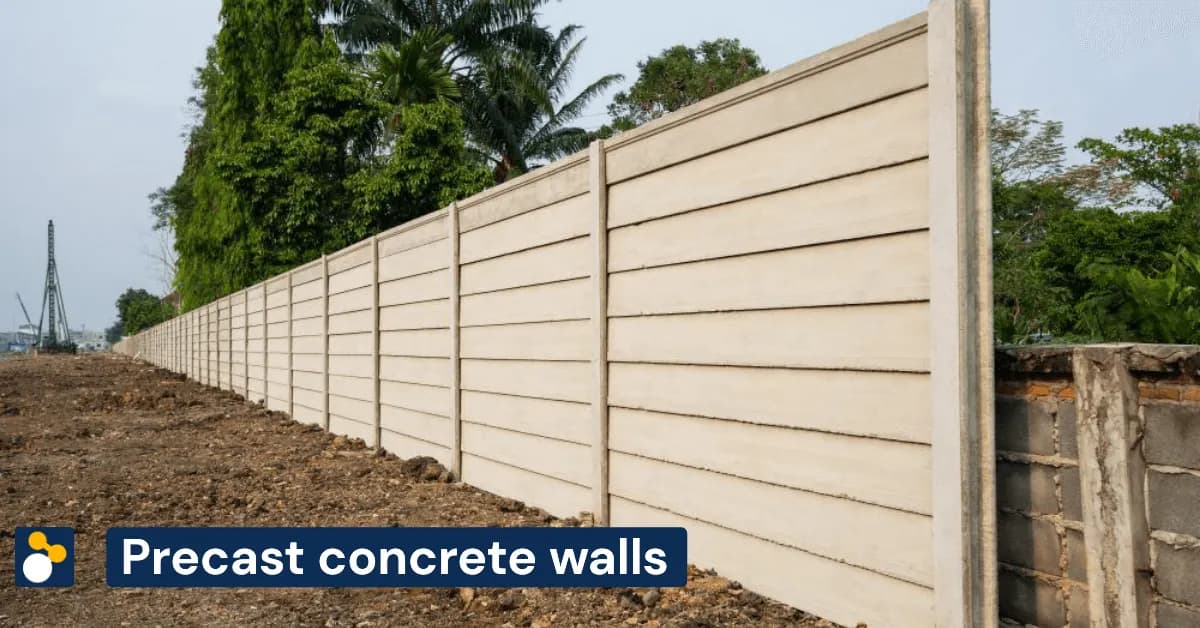
Precast concrete walls have become a popular choice in construction due to their many advantages. These walls are manufactured off-site in a controlled environment, allowing for higher quality control and efficiency in the construction process.
Key benefits of using precast concrete walls in construction
1. Cost-effective
Precast walls can be produced in large quantities, reducing the overall cost of materials and labor. The controlled manufacturing process ensures that there is less waste, and fewer workers are required on-site, which further lowers construction costs.
2. Speed of construction
Precast walls are manufactured off-site and can be quickly transported to the construction site, ready for installation. This reduces the time needed for on-site construction, allowing for faster project completion.
3. Durability
Concrete is a strong and durable material, and precast walls are no exception. They can withstand harsh weather conditions, fire, and seismic activity, making them a reliable option for long-term use.
4. Customizable
Precast concrete walls can be customized to suit the needs of the project. They come in various sizes, shapes, and finishes, allowing for a range of design options. The walls can also be pre-fitted with electrical and plumbing services, making the construction process even more efficient.
5. Sustainability
Precast concrete walls are an eco-friendly option as they are made from locally sourced materials and can be easily recycled. They are also energy-efficient, as their thermal mass can regulate indoor temperatures, reducing the need for heating and cooling systems.
6. Low maintenance
Once installed, these walls require minimal maintenance. They are resistant to mold, rot, and pest infestations, making them an ideal choice for structures that need to be hygienic and sanitary, such as hospitals or food processing plants.
Conclusion

In summary, precast concrete walls offer a range of benefits in construction, including cost-effectiveness, durability, speed of construction, customizability, sustainability, and low maintenance.
These advantages have made them a popular choice for various types of buildings, from residential to commercial and industrial structures. With the demand for sustainable and efficient building solutions on the rise, these walls are sure to continue growing in popularity.
Frequently Asked Questions
- What are precast concrete walls?
Precast concrete walls are panels manufactured off-site in a controlled environment and then transported to the construction site for installation. This method ensures higher quality control and efficiency compared to traditional on-site casting.
- How do precast concrete walls reduce construction costs?
Precast walls are cost-effective because they can be produced in large quantities, minimizing material waste and reducing labor needs on-site. The controlled manufacturing process also leads to fewer errors, lowering overall project expenses.
- Are precast concrete walls durable enough for Kenyan weather conditions?
Yes, precast concrete walls are highly durable and can withstand harsh weather, fire, and seismic activity. Their strength makes them suitable for various regions in Kenya and East Africa with diverse climate challenges.
- Can precast concrete walls be customized for different building designs?
Absolutely. These walls come in various sizes, shapes, and finishes and can be pre-fitted with electrical and plumbing services, allowing for flexible design options tailored to specific project requirements.
- How sustainable are precast concrete walls?
Precast concrete walls are eco-friendly as they use locally sourced materials and are recyclable. Their thermal mass also helps regulate indoor temperatures, reducing energy consumption for heating and cooling.
- What maintenance is required for precast concrete walls?
They require minimal maintenance since they resist mold, rot, and pest infestations. This makes them ideal for hygienic environments like hospitals and food processing plants. For more on durability and maintenance, see key benefits.
Comments
Plain-text comments only — no links. Comments appear after verification.
Loading comments…